Hydro Jetting vs Drain Snake: When You Need the Upgrade

July 30th, 2026

A drain snake makes a hole through the blockage. A hydro jetter removes the blockage and scours the pipe wall.

That is the whole difference, and it explains why one costs less and the other lasts longer. A snake restores flow. A jetter restores diameter.

Which one you need depends on two things: what is actually in the pipe, and what the pipe is made of. In older Cincinnati and Northern Kentucky homes, the second question sometimes rules jetting out entirely.

And if what brought you here is water in your basement, there is a step that comes before either service, and it has a 48-hour clock on it.

First: If Your Basement Backed Up, You Have 48 Hours

This is the most valuable thing on this page, and almost no plumber’s article mentions it.

If you are inside the City of Cincinnati or Hamilton County service area, the Metropolitan Sewer District runs a Sewer Backup Program. It came out of a federal consent decree, and it can cover professional cleaning and reimbursement for damages.

The critical detail is the deadline. Per the City of Cincinnati’s own guidance, you must report the backup to MSD within 48 hours of discovery to be potentially eligible. You can report 24 hours a day at (513) 352-4900 or at msdgc.org/sbu. MSD investigates every report, and field crews are usually dispatched within four hours.

Eligibility is narrow and worth understanding. MSD assists when the backup was caused by inadequate capacity in the public sewer, or negligent maintenance or operation of it. It does not assist when the cause is solely a private plumbing issue or overland flooding.

Here is the honest part. MSD states that about 85 percent of sewer backups are not caused by the public sewer, which means most of the time this is your lateral and you do need a plumber. But the report costs you nothing, the investigation is free, and missing the window forfeits eligibility entirely.

So make two calls, not one. Report to MSD, then call us. If MSD determines the public sewer caused it, you are in a different and much better position. If they determine it did not, you have a documented investigation and we get to work.

There is a free ombudsman if the process gets difficult. The Legal Aid Society of Greater Cincinnati serves that role at (513) 362-2801.

Northern Kentucky note. If you are in Covington, Newport, Erlanger, Fort Mitchell, Fort Thomas, or Fort Wright, your wastewater authority is Sanitation District No. 1, not MSD. Different agency, different rules, different reporting process. Check with them directly rather than assuming the Cincinnati program applies.

What Each Tool Actually Does

A cable machine, which most people call a snake or an auger, feeds a rotating steel cable through the line with a cutting or retrieving head on the end. It bores through the obstruction. Fast, less expensive, works in small-diameter and tight-turn lines, and uses almost no water.

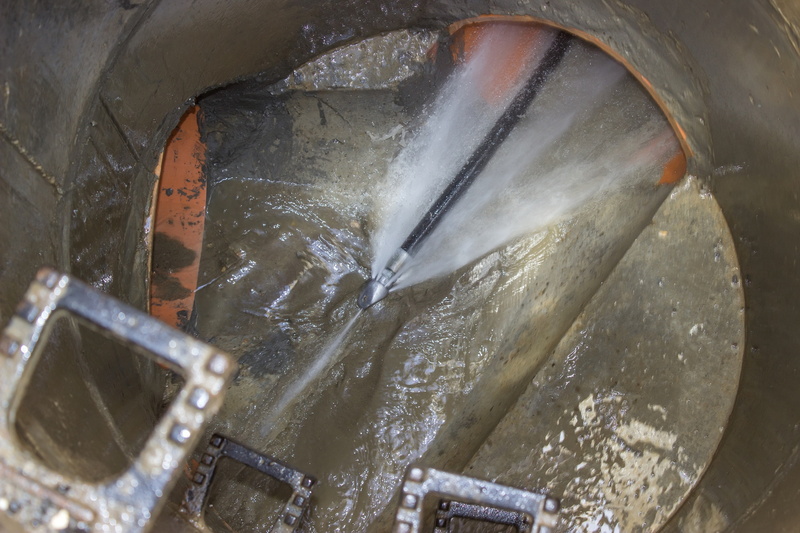
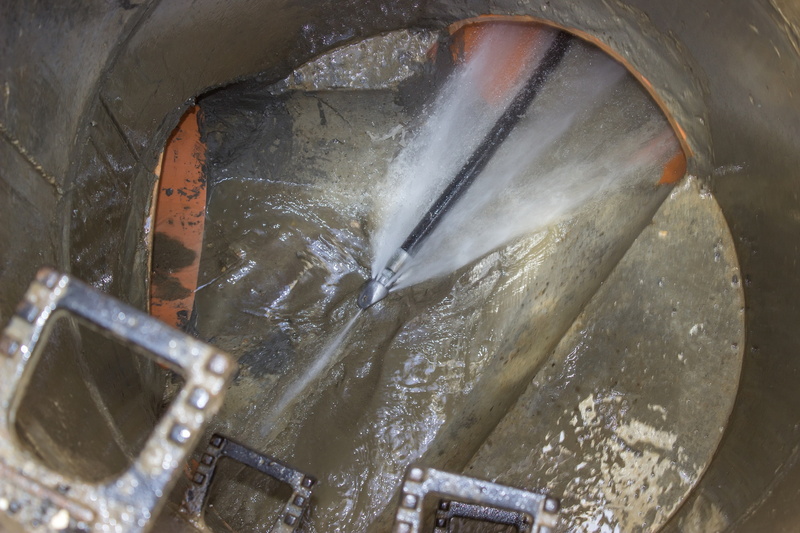
A hydro jetter pushes a hose down the line and pulls a nozzle back through it while spraying water at roughly 1,500 to 4,000 PSI at 6 to 18 gallons per minute. Rear-facing jets propel the nozzle and flush debris back toward the cleanout. It scours the pipe wall rather than punching through the middle.

The distinction that matters: after a cable, your four-inch line might be draining through a two-inch channel bored through a grease deposit. After a proper jetting, it is draining through four inches.

That is why a snaked line often clogs again in months and a jetted line on sound pipe commonly holds two to four years.

Match the Tool to What Is in the Pipe

Grease and Soap Buildup: Jetting Wins Decisively

Grease coats the pipe wall. A cable bores a channel through it and leaves the rest in place, where it immediately starts narrowing again. Hot water and pressure emulsify and flush it.

This is the clearest case for the upgrade. Kitchen lines, laundry lines, and any commercial food operation belong on a jetting schedule rather than a snaking schedule.

Tree Roots: Cable First, Then a Real Decision

Both tools cut roots. Neither stops them.

Roots enter through joints and cracks because that is where water and oxygen escape. Cut them and they regrow, typically returning within a year or two. Some sources will tell you jetting solves roots. It does not. It buys time.

The honest sequence is: clear the line so you have drainage, then put a camera in it, then decide whether to keep paying for annual cutting or seal the joints permanently with sewer pipe lining or replace the run.

Scale in Cast Iron: Water Alone Often Is Not Enough

Cast iron builds a hard mineral and rust scale on the inside wall. That rough surface is what keeps catching paper and grease, which is why the clogs keep coming back.

Water pressure alone frequently will not remove mature scale. Mechanical descaling with a chain knocker, sized carefully to the remaining wall thickness, is the tool for this. That decision requires a camera first, because a chain in a graphitized pipe will find the weak spots.

A Foreign Object: Cable or Retrieval

Toys, wipes, a lost tool, a hardened concrete slug from a remodel. A jetter may push it further down. A cable with a retrieving head pulls it out.

A Sag, Belly, or Collapse: Neither Tool Fixes It

If the pipe has lost its slope or a section has failed, the line will fill with standing water no matter how clean the walls are. Cleaning it feels like a fix for a few weeks.

This is excavation or trenchless repair territory, not a cleaning problem.

The Question That Comes First: What Is Your Pipe Made Of?

This is where jetting stops being automatically better and starts being potentially destructive.

A large share of Cincinnati’s housing stock predates 1940, and much of the surrounding area was built out in the postwar decades. That means clay, cast iron, and Orangeburg are all live possibilities on the West Side, in Northern Kentucky river towns, and across the older Hamilton County suburbs.

Vitrified clay. The pipe body is hard and handles pressure fine. The risk is at the mortar joints. If a camera shows offset or root-broken joints, high-pressure water can wash out the surrounding soil and make the problem structural.

Cast iron. The failure mode is graphitization. The pipe looks intact and has lost much of its strength, sometimes with visible flaking and measurable wall thinning. Often jettable at reduced pressure with continuous camera monitoring. Sometimes not.

Orangeburg, common in homes built roughly 1945 to 1972. Tar-impregnated wood fiber. It deforms and delaminates with age. Do not jet it. High-pressure water tears it apart. The correct service is replacement.

PVC and ABS, common after about 1980. Jets well and tolerates full pressure on a sound line.

You cannot determine any of this from above ground. A video pipe inspection is what separates a safe jetting job from an expensive mistake, and it is the reason we scope before we quote jetting rather than after.

What a Competent Jetting Job Looks Like

Five things. If you are comparing quotes, compare on these rather than price alone.

  1. A camera goes in before the nozzle does. Not only afterward to show you clean pipe. Before, to establish material, joint condition, and whether the line is a candidate at all.
  2. PSI and GPM are chosen for your pipe and stated out loud. Not one setting for every job.
  3. The nozzle is matched to the finding. A penetrating nozzle for a hard plug, a flushing nozzle for grease, a chain knocker for scale, a root nozzle for intrusion. Different problems, different heads.
  4. A camera goes in afterward, and you keep the footage. With distance markers, so you know what is where.
  5. You are told what caused it. A clog is a symptom. Grease habits, a belly, root intrusion, and scale are causes, and they have different fixes.

One clear warning sign: a company that quotes jetting sight unseen and arrives with a single pressure setting and a single nozzle is not making decisions about your pipe.

And know that more pressure is not better cleaning. Pressure cuts. Flow carries the debris away. A technician chasing maximum PSI on a fragile line is creating a repair, not preventing one.

If You Are Jetting Every Year, You Are Buying a Subscription

On a structurally sound residential line, a proper jetting commonly holds two to four years. Commercial kitchen grease lines are different by design and often need service every six to twelve months, because the accumulation genuinely rebuilds that fast.

So if a residential main needs cleaning every single year, the cleaning is not the problem. The pipe is.

At that point you are choosing between two paths. Keep paying for annual sewer cleaning indefinitely, or spend once on pipe lining, pipe bursting, or a conventional repair and stop.

Run the arithmetic over ten years before you assume cleaning is the cheaper option. Frequently it is not, and the annual service also carries the risk of the one visit that finds a collapse at the worst possible moment.

If you want the numbers side of this, our post on what drain cleaning costs in Cincinnati breaks down pricing.

Frequently Asked Questions

Is Hydro Jetting Always Better Than Snaking?

No. It is better on grease, scale, and biofilm, and on any line where you want the full diameter back. It is worse or unusable on Orangeburg, on badly deteriorated cast iron, on collapsed or bellied pipe, and for retrieving foreign objects. The camera decides.

Will Hydro Jetting Damage My Old Pipes?

It can, if the pressure is wrong for the material and condition, or if the line should never have been jetted. On a sound pipe with calibrated pressure it is safe. The risk lives in skipping the inspection, not in the tool.

How Often Should a Restaurant Line Be Jetted?

Every six to twelve months for most kitchen grease lines, and quarterly for high-volume operations. Waiting for the backup means closing during service.

Can I Rent a Jetter and Do This Myself?

Rental units are lower flow than professional equipment and come with no camera, which is the part that keeps you out of trouble. The failure mode is not a bad cleaning. It is destroying a fragile line or driving water into the soil under your slab.

Start With the Camera, Not the Tool

The right answer to hydro jetting versus snaking is not a preference. It is a finding.

Ken Neyer Plumbing has worked Greater Cincinnati, Northern Kentucky, and southeast Indiana lines since 1972, licensed in both Ohio and Kentucky. We scope the line, tell you what it is made of and what is in it, and recommend the cleaning method the pipe can actually take.

Start with a video pipe inspection. If the finding points to grease, hydro jetting is the answer. If it points to a cable job, that is what we will quote. If it points to a repair, we will tell you that instead of selling you a cleaning that will not hold.

And if your basement flooded, call MSD at (513) 352-4900 first. The 48-hour window matters more than the order you call us in.

Call us today or schedule service.

Continue Reading

How Much Does Drain Cleaning Cost in Cincinnati?

July 27th, 2026

A slow drain seems like a small problem until it turns into a completely blocked one. Whether it is a kitchen sink that drains at a crawl or a main sewer line backing up into your basement, drain issues in Cincinnati homes tend to get worse the longer they sit. At some point, you pick up the phone and call a plumber, and the first question that crosses your mind is: how much is this going to cost?

The honest answer is that drain cleaning cost in Cincinnati depends on several things, including which drain is clogged, how serious the blockage is, what method is needed to clear it, and when you call. This guide breaks down realistic pricing so you know what to expect before a plumber ever knocks on your door.

Average Drain Cleaning Cost in Cincinnati

For most Cincinnati homeowners, a standard drain cleaning service falls somewhere between $100 and $350 for a single drain. That range covers the most common situations: a clogged bathroom sink, a slow shower drain, or a backed-up kitchen line. More complex jobs, like a blocked main sewer line or a drain requiring hydro jetting, can push costs to $300–$600 or higher.

Here is a general cost snapshot for common drain cleaning jobs in the Cincinnati area:

  • Kitchen sink drain: $150 – $300
  • Bathroom sink or tub drain: $100 – $250
  • Toilet clog (beyond a simple plunger fix): $100 – $275
  • Floor drain: $150 – $300
  • Main sewer line cleaning: $250 – $600
  • Hydro jetting: $350 – $700+

These are typical ranges. Your final cost depends on what the plumber finds once they assess the situation.

Factors That Affect Drain Cleaning Cost in Cincinnati

Several variables move the needle on what you will pay for drain cleaning in Cincinnati.

Severity of the Blockage A partial clog that a drain snake can clear in 20 minutes costs far less than a total blockage caused by years of grease, soap scum, or root infiltration. The more effort and time a job requires, the higher the cost.

Location of the Clog Clogs near the drain opening are easier and cheaper to clear. Blockages deep in a pipe, or far down a main sewer line, take more time and equipment.

Drain Type and Pipe Size Main sewer lines are larger and require heavier equipment than a standard sink drain. Larger pipes take more time and may need methods like hydro jetting rather than a basic snake.

Method Required A mechanical drain snake is the most affordable method. Camera inspections, hydro jetting, and chemical treatments each add to the cost but are sometimes necessary depending on what is causing the problem.

Time of Service Emergency drain cleaning after hours, on weekends, or during holidays typically carries a higher rate. Scheduling regular service during business hours is the most cost-effective approach.

Age and Condition of Plumbing Older homes in Cincinnati — many built in the early 1900s — often have cast iron, clay, or Orangeburg pipes that can complicate the job. A plumber may need to take extra care or use specific equipment to avoid damaging aging pipes.

Common Drain Cleaning Methods and Their Costs

Understanding the methods involved helps make sense of the pricing.

Drain Snaking (Mechanical Augering)

A drain snake is a flexible cable that breaks up or retrieves clogs physically. It is the standard tool for most routine clogs and the least expensive option. Expect to pay $100–$275 for snake-based clearing depending on the drain.

Hydro Jetting

Hydro jetting uses high-pressure water to blast through grease buildup, scale, and debris. It is more thorough than snaking and is especially effective for main lines, commercial kitchens, or pipes with years of buildup. Costs typically range from $350–$700 and up, depending on pipe length and access.

Video Pipe Inspection

Before clearing a stubborn drain, a plumber may run a small camera through the line to identify exactly what is causing the blockage. Video pipe inspection adds $100–$300 to the job but saves money in the long run by avoiding guesswork. It is especially useful when a drain repeatedly clogs despite previous cleaning.

Chemical Treatments

Store-bought drain chemicals are not the same as professional-grade treatments. For certain situations, a plumber may use enzyme-based cleaners as a follow-up measure, though these are rarely a standalone fix for serious clogs.

Signs You Need Professional Drain Cleaning

Not every slow drain requires a professional, but some situations call for a licensed plumber rather than a bottle of Drano.

  • Multiple drains are slow or backing up at the same time
  • Gurgling sounds coming from drains or toilets
  • Water backing up into a tub or sink when you flush the toilet
  • Persistent foul odors coming from drains
  • Recurring clogs in the same drain despite repeated DIY attempts
  • Standing water in your basement floor drain

If several drains are acting up simultaneously, the problem is likely in the main sewer line rather than an individual branch. That is a job for a professional, not a hardware store solution.

Is DIY Drain Cleaning Worth It?

For minor, surface-level clogs, a basic drain snake or a cup plunger can handle the job without calling anyone. The moment the clog is deep, recurring, or affecting multiple drains, DIY methods tend to make the situation worse or push the blockage further down the line.

Over-the-counter chemical drain cleaners are hard on pipes, especially older ones. They can eat through plastic fittings and corrode metal pipes over time. If you find yourself using them monthly on the same drain, that is a sign of a bigger issue that a drain and sewer professional should evaluate.

When Drain Cleaning Turns Into Drain Repair

Sometimes a clogged drain is a symptom of a deeper structural problem. Tree root intrusion, pipe corrosion, collapsed sections, or misaligned joints can all cause recurring blockages that no amount of cleaning will permanently fix.

If a camera inspection reveals damage to the pipe itself, the job transitions from cleaning to drain repair. Repair costs vary widely depending on the location and extent of damage, but catching problems early almost always costs less than waiting until a pipe fails completely.

In cases where sewer line damage is significant, trenchless technology can be a cost-effective alternative to traditional excavation. Trenchless pipe lining and pipe bursting repair or replace damaged lines with minimal digging, which reduces labor costs and disruption to your property.

What Does a Professional Drain Cleaning Service Include?

When you hire a reputable plumber for sewer cleaning or drain work in Cincinnati, the job typically includes:

  • Initial assessment of the affected drain or drains
  • Snaking or hydro jetting as appropriate for the clog type
  • Verification that water flows freely after clearing
  • Recommendations for any underlying issues observed

A good plumber will not just clear the immediate blockage and leave. They will tell you what caused it and whether you are likely to see the same problem again. That transparency is worth paying for.

Why Choose Ken Neyer Plumbing for Drain Cleaning in Cincinnati?

Ken Neyer Plumbing has served greater Cincinnati since 1972. That is over five decades of working in homes and commercial buildings across the region — long enough to know what Cincinnati’s pipes are up against, from the clay sewer laterals common in older neighborhoods to the cast iron stacks in mid-century homes.

The team at Ken Neyer offers the full range of plumbing services needed to diagnose and resolve drain problems correctly the first time: drain cleaning, hydro jetting, video inspection, drain repair, and sewer line work. There is no need to call multiple contractors. One experienced team handles it all.

Ken Neyer serves homeowners and businesses across greater Cincinnati and the Tri-State area, including communities in Ohio, Kentucky, and Indiana. Licensed in both Ohio and Kentucky, the company brings the same standard of workmanship to every job, whether it is a simple kitchen drain clog or a full sewer line replacement.

Get an Honest Quote for Drain Cleaning in Cincinnati

Drain problems do not fix themselves, and the longer a blockage sits, the more it tends to cost to resolve. If you are dealing with a slow drain, recurring clogs, or a backed-up sewer line, the right move is to get a professional assessment before a manageable problem turns into a major one.

Ken Neyer Plumbing provides straightforward pricing and experienced technicians who will explain what is going on and what it will take to fix it. Schedule a service call today and get your drains flowing properly again.

Continue Reading

Cincinnati Water Filtration Systems: Protect Your Health and Home

April 1st, 2025
why water filtration matters in Cincinnati

Water is one of the most essential resources in our daily lives. From drinking and cooking to cleaning and bathing, we rely on clean water for virtually everything. For homeowners in Cincinnati, ensuring the quality of your water is not just a matter of convenience but a critical step in protecting your health and home. While the city’s water treatment facilities do an excellent job of delivering safe water, contaminants can still make their way into your supply through aging infrastructure, natural minerals, or even environmental pollutants.
Continue Reading

What Happens When You Neglect Drain Service for Too Long

November 20th, 2023

In the bustling orchestra of household chores, the drain often plays a silent but very important role. From whisking away the remnants of a delicious meal to carrying the suds of a refreshing shower, drains quietly perform their duties… until they don’t. Neglecting drain services in Covington, KY, might seem like a harmless oversight, but the consequences can turn a harmonious home into a series of plumbing problems.

Let’s dive into the murky waters of what happens when you ignore your drains for too long and why giving them the attention, they deserve is a tune worth singing.

Continue Reading

The Real Cost of Avoiding Sewer Cleaning

November 6th, 2023

Ah, the sewer system. The underappreciated hero of our homes that carries away our waste and ensures we never have to think twice about it. Out of sight, out of mind, right? Well, not quite. When it comes to sewer cleaning, ignoring the signs can lead to a stinky tale of costly problems. Let’s take a closer look at the hidden world of your sewer system, the true cost of neglect, and why proactive sewer cleaning services in Cleves, OH, might just save you from a financial nightmare.

Continue Reading

Classic Warning Signs That You Need Sewer Line Repair

October 23rd, 2023

Let’s face it the sewer line isn’t exactly a topic that gets a lot of attention in everyday conversation. We often take it for granted, assuming that it’s working just fine beneath our homes and streets.

That is, until it’s not. When your sewer line starts to show signs of distress it’s important to pay attention. A damaged sewer line can lead to messy and expensive problems and the need for sewer line repair in Cincinnati, OH. Let’s look at some classic warning signs that indicate it might be time for sewer line repair. 

Continue Reading

How to Identify Copper Corrosion in Your Home and What it Means

October 9th, 2023

Copper plumbing is known for its durability and reliability. Because of these qualities, it is a popular choice in many homes. Copper can corrode over time. When copper corrosion happens in Cleves, OH, it can lead to a multitude of plumbing issues. Copper in small doses, like the amount one would receive from properly functioning pipes, isn’t harmful. However, in large amounts, copper can be harmful to humans. Identifying copper corrosion in your home is important to address problems before they worsen. Here’s how to recognize corrosion and what it means for your plumbing system.

Continue Reading

3 Ways to Prevent Pipes From Bursting in Your Home This Winter

September 25th, 2023

Winter brings its own set of challenges and one of the most concerning for homeowners is the potential for pipes to burst due to freezing temperatures. The damage caused by pipes bursting in Cincinnati, OH, can be extensive and costly to repair. With some proactive measures you can safeguard your plumbing and keep your home cozy throughout the cold season. Here are three effective ways to prevent pipes from bursting during winter:

Continue Reading

Why Hydro Jet Drain Cleaning is Better Than Any DIY Solution

September 11th, 2023

A clogged drain is a common household nuisance that can disrupt your daily routines and lead to plumbing headaches. Many homeowners turn to do-it-yourself solutions to clear these blockages. While DIY methods like plungers and chemical drain cleaners might provide temporary relief they often fail to address the root of the problem. There is a better and longer lasting solution. Hydro jet drain cleaning in Covington, KY. Let’s take a look at why hydro jet drain cleaning surpasses DIY approaches!

Continue Reading

What’s That Smell? It Could Be Your Sewer Pipe

August 28th, 2023

Unpleasant odors in and around your home can be not only distracting but also worrisome. If you’ve noticed a foul smell that seems to linger it might not be a forgotten dish or a piece of spoiled food. In some cases the culprit behind the offensive odor could be your sewer pipe. Let’s talk about sewer pipe lining in Cleves, OH, and some reasons why your sewer pipe might be emitting unpleasant smells!

Continue Reading