
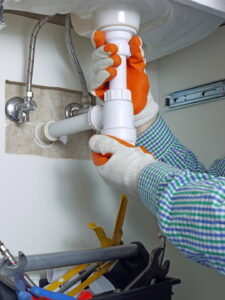
Here’s a tip: plumbing doesn’t have to be complicated. Sure, when you encounter a difficult problem that requires a professional master plumber, you’re almost always better off making that call. But sometimes problems can border on being fixable by a homeowner or by a plumber. It’s up to our customers to be able to differentiate between a problem that’s able to be repaired with DIY strategies and one that requires a professional.
This blog post is dedicated to those few times when a repair might actually be fixable with the right tools on hand. From plungers, to drain snakes, and even household cleaners, you can make a pretty substantial improvement to your home’s drains and plumbing system.
But just remember–nothing replaces the real deal. If you encounter a particularly stubborn problem, you should always call our team of licensed plumbers. We are always able to help with bathroom plumbing in Cleves, OH, no matter the scale or solution!
 The bathrooms in your house use the most freshwater of any location. Just a single bathroom can account for more than 50% of all freshwater used in the house.
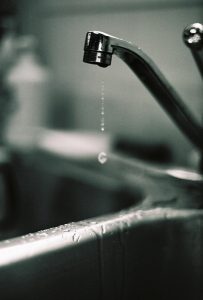 Nobody wants leaking pipes, fixtures, or appliances in their home. Unfortunately, leaks are often what they get—they are among the most common of plumbing problems. The good news is that professional plumbers know the best way to track down leaks, wherever they are, and repair them.
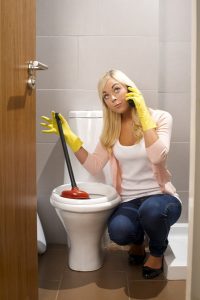 The bathroom uses more water than any other room in the house. Considering how much water goes to daily showering, this makes a lot of sense. The toilet alone accounts for 40% of all indoor water use. You probably won’t be surprised to learn that a large part of the work of a professional plumber centers on providing installations, repairs, and maintenance for the bathroom plumbing.
 When a bathroom feels tired and old, a homeowner often considers doing a remodel. But a full remodel isn’t always the answer, and you may be in a situation where you’re fine with how your bathroom looks—you just want it to be more convenient, work better, or help save water. The question you have is whether you should arrange to replace the fixtures in your bathroom.
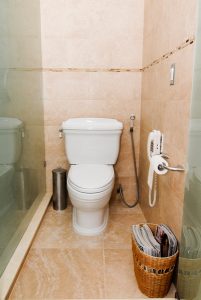 What appliance in your home uses the most water per year? You’d likely guess “the shower,” but that’s not correct. (Unless you take ridiculously long showers—which you should stop doing right away!) No, the correct answer is “the bathroom toilet.” The toilet accounts for 40% of all indoor water use. This means that a toilet that uses too much water is the biggest source of household water waste. If you have an older toilet (more than 20 years), we recommend looking into having it replaced with a special low-flow model, also known as a low-flush toilet. But a low-flow toilet is also a good idea as a replacement for newer standard toilets. The difference in water use is still significant.
 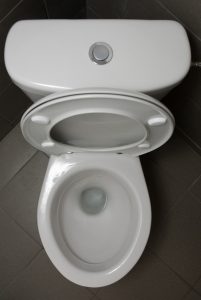 There are sounds you expect to hear from appliances and fixtures in your house, and you know how long these sounds should continue. For example, after a toilet is flushed, you should hear the sound of running water for about a minute afterwards. This is water coming from the feed line to fill up the tank to a set level, ready to rush down into the bowl for the next flush.