

When you turn on the tap to drink your home’s water, what does it taste like? Are you reading that question with bottled water in hand thinking that you’d never drink water from your home’s tap? Or perhaps it’s just got a slightly weird taste but otherwise, it’s safe to drink.
The truth is that technology has come a long way in the field of water treatment systems. Whether you’ve got well water as your water source, or perhaps you use the local municipality’s water, a filtration system is always welcome in a home that needs cleaner water. That’s why we’d like to talk about reverse osmosis systems in Cincinnati, OH.
These systems are designed to remove all contaminants from your water supply as they travel through the filter. We’ll explain down below how the reverse osmosis process works, why homeowners might benefit from such a system, and we’ll talk about how to tell if your water needs professional filtration!
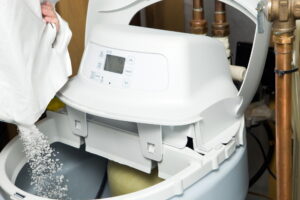


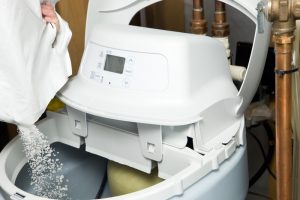 One of the important services we offer to our customers is the installation of water softeners. A
  We’ve previously discussed the trouble with hard water in a home’s plumbing before on our blog. There’s a good reason for this: hard water is a problem found across the country, in particular in large cities and their suburbs. In some homes, the hardness level of the water is minor and doesn’t cause noticeable issues. But your home may be one of those where hard water is creating
  On our blog, we’ve addressed the
  Hard water is one of the most common types of water quality issues homes encounter. No matter how well water is purified at a water treatment plant, hard water minerals (magnesium and calcium) can seep through ground water and into the municipal pipes carrying the freshwater to homes.
 If the first thing that comes to mind when you think of the words water filtration is a pitcher with a water filter cartridge in it, you should know there are much more effective ways to provide clean water to your house. A simple water pitcher can do some good, but it certainly doesn’t help your whole home, and there are many impurities that may escape it. Point-of-use filters attached to individual faucets have the same drawbacks.